Planning and Building Criminal Law Lawyer in Annecy
Maître Jean-Marie de Poulpiquet
A criminal defence and a regularisation strategy for your buildings
Maître Jean-Marie de Poulpiquet, a member of the Annecy Bar, defends private individuals, construction professionals and farmers prosecuted for a planning offence, from the investigation through to the hearing.
A town hall officer notices building work, an official report is drawn up, then a summons arrives. Building without a permit, work that does not comply with the permit, unauthorised change of use… all of these cases are tried by the criminal court. Maître de Poulpiquet supports you at every stage, seeking a regularisation solution whenever possible.
Need a planning and building criminal law lawyer in Annecy?
Contact Maître de PoulpiquetA town hall officer notices building work, an official report is drawn up, then a summons arrives. Building without a permit, work that does not comply with the permit, unauthorised change of use… all of these cases are tried by the criminal court. Maître de Poulpiquet supports you at every stage, seeking a regularisation solution whenever possible.
Need a planning and building criminal law lawyer in Annecy?
Contact Maître de PoulpiquetWhat are planning offences?
The French Planning Code imposes criminal penalties for building work carried out in breach of planning rules. The most common situations are:
building without a building permit or without a prior declaration;
work that does not comply with the permit granted (height, siting, floor area, external appearance);
failure to comply with the local urban development plan (PLU) or the municipal land-use map;
unauthorised change of use, for example a barn converted into a home;
buildings in agricultural, natural or protected areas.
Criminal liability does not rest solely with the owner. The person benefiting from the work, the contractor, the architect or anyone responsible for carrying out the work may also be prosecuted.
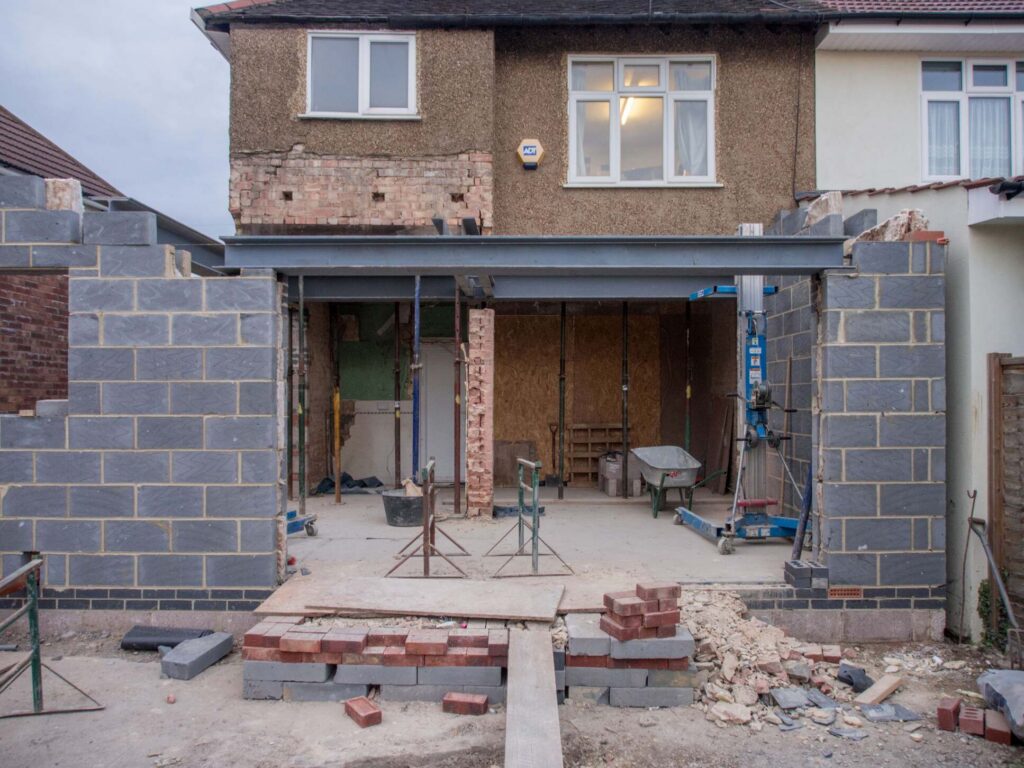
Building without a permit: what are the penalties?
Penalties under the French Planning Code
A fine of €1,200 to €6,000 per square metre of floor area built, or up to €300,000 in other cases (Article L. 480-4).
Up to six months’ imprisonment for repeat offences.
Bringing the building into compliance, demolition or restoration of the site, as ordered by the court (Article L. 480-5).
A daily penalty of up to €500 for each day of delay in carrying out these measures (Article L. 480-7).
Administrative measures and limitation periods
In parallel, the mayor may issue a stop-work order. The mayor may also serve formal notice on the offender to regularise their situation, subject to a daily penalty capped at €25,000.
Criminal proceedings become time-barred six years after completion of the work. Be careful, however: the municipality has ten years to seek demolition before the civil courts. The criminal limitation period therefore does not remove all risk.
Planning offence report: what to do
The official report is drawn up by a judicial police officer or by a sworn officer of the municipality. It is then sent to the public prosecutor, who decides what action to take. This is a decisive moment: your first statements and first decisions will weigh on the entire procedure.
A few good reflexes:
do not continue the work after a stop-work order, as this would constitute a separate offence;
gather your permits, plans, photos and correspondence with the town hall;
consult a lawyer before any interview.
Maître de Poulpiquet examines whether the official report is lawful and assists you during your interview. He opens discussions with the town hall and the prosecution service, and explores the options for regularising your building.
Have you received an official report or a summons?
Request a consultation
Defence before the criminal courts
When the prosecutor brings proceedings, the case may be tried before the criminal court. Maître de Poulpiquet represents you before the competent courts in Savoie and Haute-Savoie.
Several lines of defence may be used depending on your case:
Challenging the factual basis of the offence;
Examining the limitation period and the lawfulness of the procedure;
Taking into account a regularisation that has been obtained or is under way;
Arguing for a penalty proportionate to the seriousness of the facts and the circumstances of the case;
Challenging any demolition or restoration order, particularly in view of its consequences for your home.
Neighbours and private individuals: asserting your rights
An unlawful building can also harm neighbouring owners. Maître de Poulpiquet assists private individuals who wish to have their rights recognised and obtain compensation for the harm suffered.
Neighbours and private individuals: asserting your rights
An unlawful building can also harm neighbouring owners. Maître de Poulpiquet assists private individuals who wish to have their rights recognised and obtain compensation for the harm suffered.

Preventing criminal risk: audit and compliance
Prevention is often the best defence. Maître de Poulpiquet works upstream to secure your projects:
checking that a property complies before you buy it, alongside his work as a real estate law lawyer;
analysis of the applicable rules before any work begins, as part of his planning law practice;
filing a regularisation permit application when the building can be brought into compliance;
advice to farmers on buildings in agricultural areas, in connection with rural law.
As a lecturer in planning law at the Catholic University of Lyon, Maître de Poulpiquet has an in-depth command of both the substantive rules and the criminal procedure that applies to them.
Contact Maître Jean-Marie de Poulpiquet
Building without a permit, an official report, a summons or a hearing: every step needs to be prepared. Maître de Poulpiquet gives you clear information about his fees from the very first meeting, at his office in Annecy or by video call.
Book an appointment